


Latest from BISA
Joint letter from the chairs of PSA, BISA and UACES on risks to the Department of Politics and International Relations at Goldsmiths
The associations have issued a joint letter against staff cuts which would make 3.1 staff redundant.
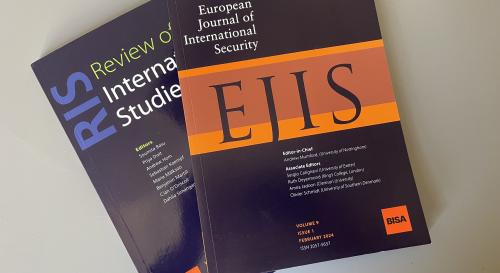
RIS and EJIS remove requirement for place of publication for references and citations
Find out more about this change for both of our journals, further improving the publication process.
Call for papers - 16th Annual Conference of the US Foreign Policy Working Group
Details of the theme and Call for Papers for the USFP Annual Conference 2024.

IR Career Starters - April 2024
The latest internships, traineeships, fellowships and entry-level positions in IR from Alex Borum.

Take Five - 12 April 2024
Dominic Hart brings you the five best IR-related podcasts and readings this fortnight. Take five.

UG event series - Essay writing: top tips
A recording of the second in a series of free undergraduate events.
Call for new postgraduate working group convener
Could you be the next postgraduate convener for the South East Europe Working Group?

Susan Strange Best Book Prize 2024 shortlist announced
Three excellent books made the list and will be judged by a committee appointed by a BISA Trustee.